
Getting good sleep is important in maintaining health. There are several things that you can do to promote good sleep and sleep hygiene, and ultimately get better sleep.
𝗪𝗵𝗮𝘁 𝗶𝘀 𝗦𝗹𝗲𝗲𝗽 𝗛𝘆𝗴𝗶𝗲𝗻𝗲?
Sleep hygiene is defined as behaviors that one can do to help promote good sleep using behavioral interventions. Sleep hygiene encompasses applying certain behavior and practices for a good night’s sleep. Sustaining good sleep hygiene helps you fall asleep faster and stay asleep until you complete the required sleep cycles. After all, having 7 to 8 hours of sleep makes our bodywork overall cognition, reasoning, and verbal abilities activities better the next day. To secure the maximum benefits of sleep, you need to consistently practice good sleep hygiene.
𝗪𝗵𝗮𝘁 𝗶𝘀 𝗚𝗼𝗼𝗱 𝗦𝗹𝗲𝗲𝗽 𝗛𝘆𝗴𝗶𝗲𝗻𝗲?
Understanding sleep hygiene and getting a good routine set up for yourself will help you getter better and more refreshing sleep.
𝘽𝙚 𝘾𝙤𝙣𝙨𝙞𝙨𝙩𝙚𝙣𝙩
Go to bed and wake up at the same time every day, even on weekends, and make sure you are getting seven to nine hours of sleep each night. Inconsistent sleep schedules or poor sleep can lead to:
- Cardiovascular disease
- Diabetes
- Obesity
- Unnecessary stress levels
- Depression
- Addiction
- Anxiety
𝗛𝗢𝗪 𝗧𝗢 𝗜𝗠𝗣𝗥𝗢𝗩𝗘 𝗦𝗟𝗘𝗘𝗣 𝗛𝗬𝗚𝗜𝗘𝗡𝗘
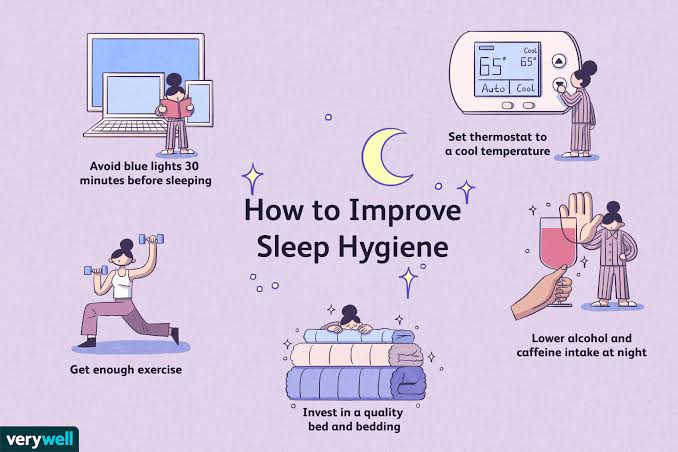
𝗔𝘃𝗼𝗶𝗱 𝗯𝗹𝘂𝗲 𝗹𝗶𝗴𝗵𝘁𝘀 𝗯𝗲𝗳𝗼𝗿𝗲 𝗯𝗲𝗱.
The use of artificial lighting and electronics at night may contribute to sleep problems. Electronic devices such as computers, smartphones, tablets, and televisions emit light of a blue wavelength, which may trick your brain into thinking it is daytime. This, in turn, can disrupt your circadian rhythm.
Avoid all electronics for 30 minutes to one hour before bed.
𝗚𝗲𝘁 𝗨𝗽 𝗪𝗵𝗲𝗻 𝗬𝗼𝘂 𝗖𝗮𝗻’𝘁 𝗦𝗹𝗲𝗲𝗽.
On some nights, it can de difficult to fall asleep or stay asleep. You may toss and turn, stare at the clock, count sheep, and become frustrated. If you try falling asleep but find yourself tossing and turning for 20 minutes or more, get out of bed and do something relaxing such as reading a book, journaling, listening to music, or meditating. Then return to bed and try again.
𝗘𝘀𝘁𝗮𝗯𝗹𝗶𝘀𝗵 𝗮 𝗖𝗮𝗹𝗺𝗶𝗻𝗴 𝗦𝗹𝗲𝗲𝗽 𝗥𝗼𝘂𝘁𝗶𝗻𝗲.
Whether this is taking a warm bath before bed, meditating, or reading, create a wind-down routine that relaxes your body and mind before you get into bed. The goal is to crawl into bed when you are relaxed and tired, not stressed out and wide awake.
𝗛𝗼𝘄 𝗗𝗮𝗶𝗹𝘆 𝗟𝗶𝗳𝗲 𝗔𝗳𝗳𝗲𝗰𝘁𝘀 𝗦𝗹𝗲𝗲𝗽.
Our daytime routine is just as important as our pre-bed nighttime routine. We must take care of our mental and physical health during the day so we can obtain a solid night’s sleep. During the day, it’s important to:
- Get outside
- Be physically active
- Avoid nicotine
- Reduce alcohol and caffeine consumption in the evening
- Avoid late-night eating
The basic concept of sleep hygiene, that your environment and sleep habits can be optimized for better sleep, applies to just about everyone. But what ideal sleep hygiene looks like can vary among each individual.
Depression, insomnia, anxiety, and obstructive sleep apnea may require professional treatment. So if you feel like you have exhausted all of your sleep routine methods, it may be time to talk to a therapist or doctor. You deserve the best sleep possible.
 SLEEP HYGIENE